Receive and identify
Record the asset, drawing and revision. Photograph the assembly and note visible damage and the reported failure.
MACKAY WORKSHOP & SITE SUPPORT
New assemblies, refurbishment and lagging
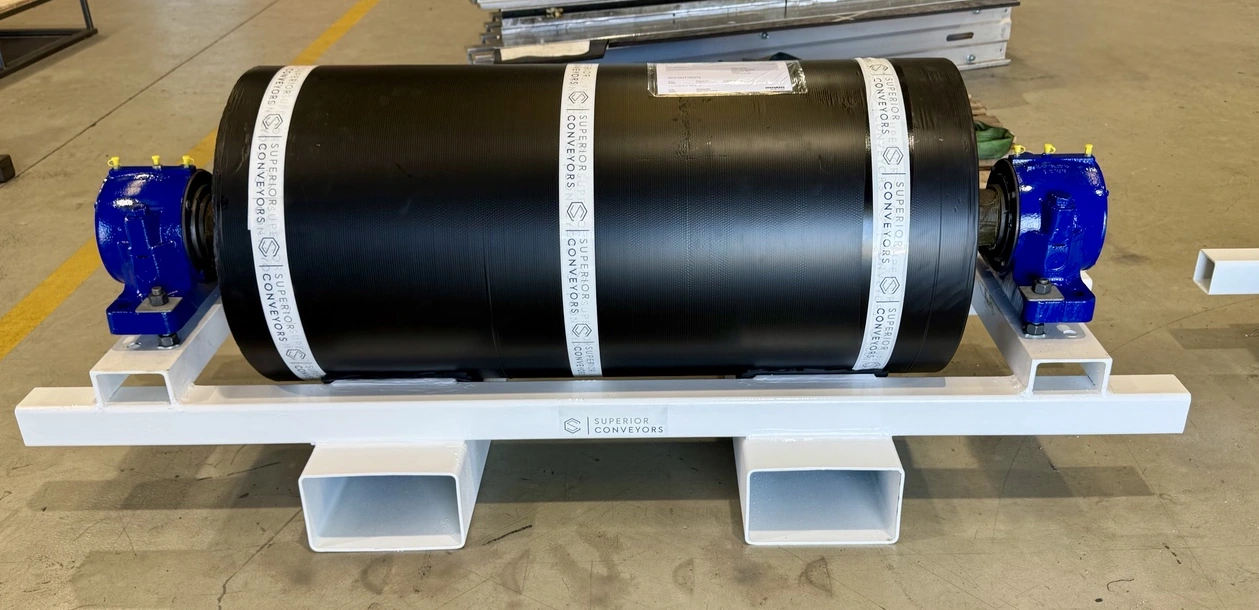
Superior Conveyors supplies new pulleys and provides workshop assembly, refurbishment and rubber, polyurethane or ceramic lagging. Send the drawing, application details or the existing assembly for assessment.
PULLEY SUPPLY & WORKSHOP SERVICES
A new pulley to an approved drawing, or a replacement for an existing installation.
↗Inspect a returned pulley and establish which components can be retained or replaced.
↗Replace lagging or arrange defined shaft, bearing, housing or seal work.
↗Not sure whether to replace or refurbish? Send photos and the drawing for a specification check.
PULLEY RANGE
The pulley position describes its role. Dimensions, shaft arrangement, lagging and components still need to be checked.
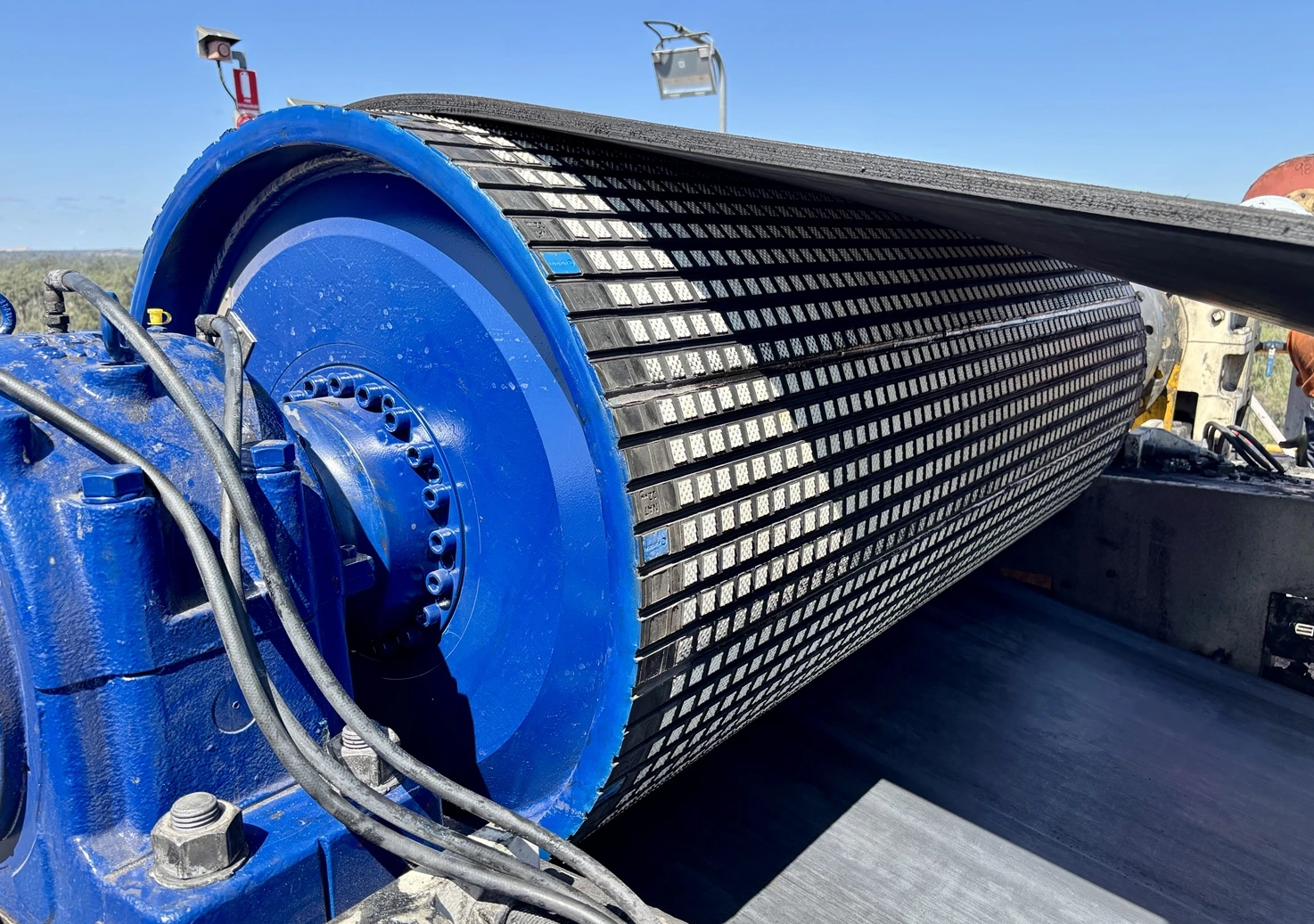
A live shaft rotates with the pulley. A dead shaft stays stationary while the shell rotates on its bearings. Include the arrangement on the drawing or attach photographs; the bearing and support layouts are different.
NEW & REPLACEMENT PULLEYS
Matching the shell diameter and face width is not enough. Bearing centres, shaft journals and the drive connection must also fit the installation.
Provide the controlling drawing and revision wherever possible. If loading, belt speed or the drive has changed, include those changes. A like-for-like replacement does not resolve a recurring failure without checking the cause.
The supplied range includes custom dimensions and component options. Manufacturing methods, inspection scope and acceptance criteria are confirmed for the order. No universal load or speed rating is implied.
ASSEMBLY DETAILS
WORKSHOP REFURBISHMENT
A strip-and-assess report establishes the condition of the shell, shaft and component seats. The repair scope follows the findings, not an assumption that every pulley can be rebuilt.
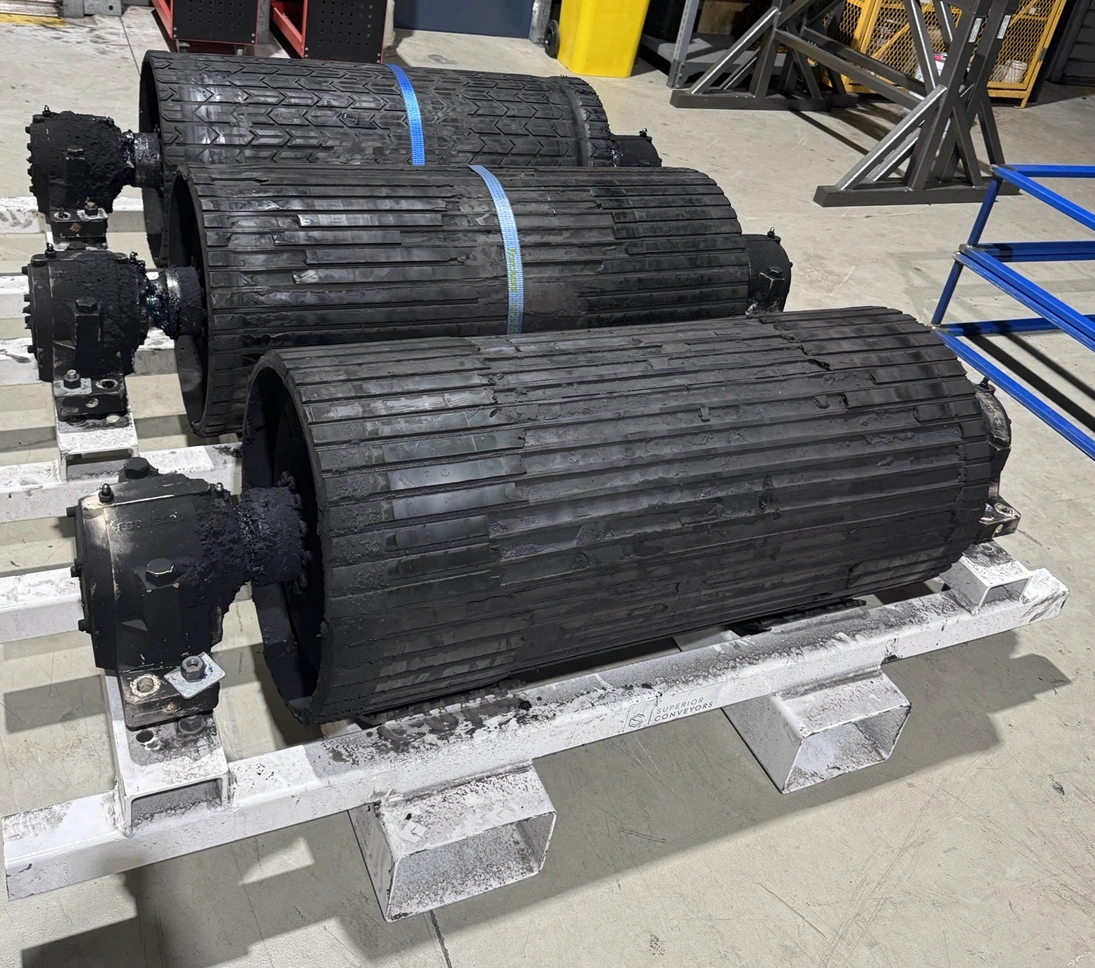
Record the asset, drawing and revision. Photograph the assembly and note visible damage and the reported failure.
Inspect the shell, shaft, hubs and component seats. Agree the required non-destructive testing and record the findings.
Identify reusable and replacement components. Agree repairs, lagging, machining and additional tests before proceeding.
Fit the specified components. Record the relevant locking-element torque, bearing-clearance checks and assembly measurements.
Record the selected lagging, preparation conditions, installation checks and adhesion result where included in the scope.
Complete final inspection, photographs and the agreed dossier. Confirm the cradle, protection, identification and storage requirements.
Report recurring shaft, bearing or shell failures with the enquiry. Changes in operating conditions, component fits and installation loads may need investigation before rebuilding the same arrangement.
Request a refurbishment assessmentSelect the lagging for the pulley position, belt contact and failure mechanism. A drive pulley needs traction; a non-drive pulley may need wear resistance without excessive friction against the belt cover.
A practical starting point where the selected compound and groove pattern provide adequate grip and service life.
Rubber lagging → POLYURETHANEConsider polyurethane where non-drive lagging wears rapidly or fines build up between the belt and pulley.
Polyurethane lagging → CERAMICDimpled drive surfaces and smooth non-drive surfaces serve different purposes. Specify tile profile and construction.
Ceramic lagging →Record slip, polished contact areas, groove wear, build-up, debonding, missing tiles and belt-cover damage. Changing the material alone does not correct poor belt cleaning, incorrect tension or an unsuitable installation.
Rubber combines a resilient belt-contact surface with a range of compounds and finishes. It remains a cost-effective option where grip and wear life are satisfactory.
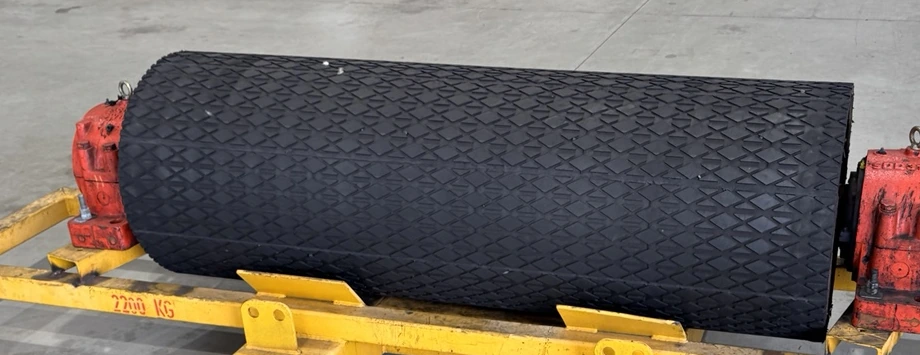
Grooved rubber helps channel water and fines away from the contact area. Diamond and directional patterns need to suit the pulley position and belt travel. Grooves packed with carryback cannot drain effectively.
The rubber contact layer can accommodate local belt-cover variation. Compound flexibility matters on pulleys contacting a worn carry cover; a harder surface is not automatically the better replacement.
Retain rubber where the installation has adequate traction, acceptable wear and no recurring bond failure. Compare the installed cost and replacement interval before moving to a more expensive surface.
Compound, hardness, finished thickness, groove geometry and application method. Check running and starting tensions, wrap angle, belt speed and exposure. Heat-resistant, oil-resistant and flame-retardant/antistatic requirements need a suitable grade and supporting documents.
Record uneven wear, open joins, lifting edges and exposed shell. Investigate the cause before repeating the same lagging specification.
Polyurethane provides a wear-resistant contact surface with useful material-release properties. It is particularly relevant on non-drive pulleys where abrasion or build-up is shortening lagging life.
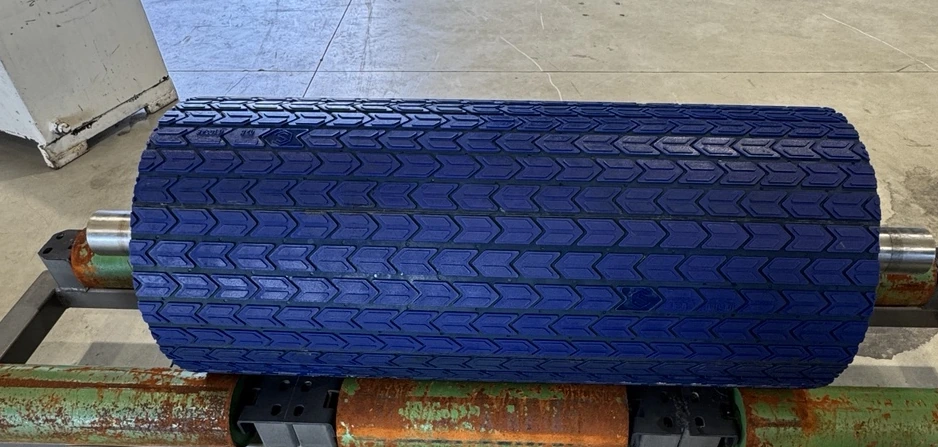
Consider polyurethane when repeated sliding contact with abrasive fines is wearing rubber lagging. Review the actual wear pattern and belt condition rather than choosing a material from hardness alone.
A low-adhesion surface can help release sticky fines and limit deposits that change the effective pulley diameter. This complements belt cleaning and return ploughs; it does not replace them.
On suitable bend and other non-drive applications, a lower-friction surface can reduce shear against the belt cover where relative movement occurs. That requirement is different from generating traction at a drive pulley.
Hot-cast polyurethane forms a one-piece covering without bonded strip joins and is finished to the required profile. Rubber-backed polyurethane strips are a different construction; the backing may be cold bonded or hot vulcanised using an approved system. Confirm the process, access and turnaround.
Specify the polyurethane grade, thickness, hardness and surface pattern, then confirm temperature, wet-service suitability and any required material approval. A low-friction non-drive product must not be substituted onto a drive without checking traction and the complete application.
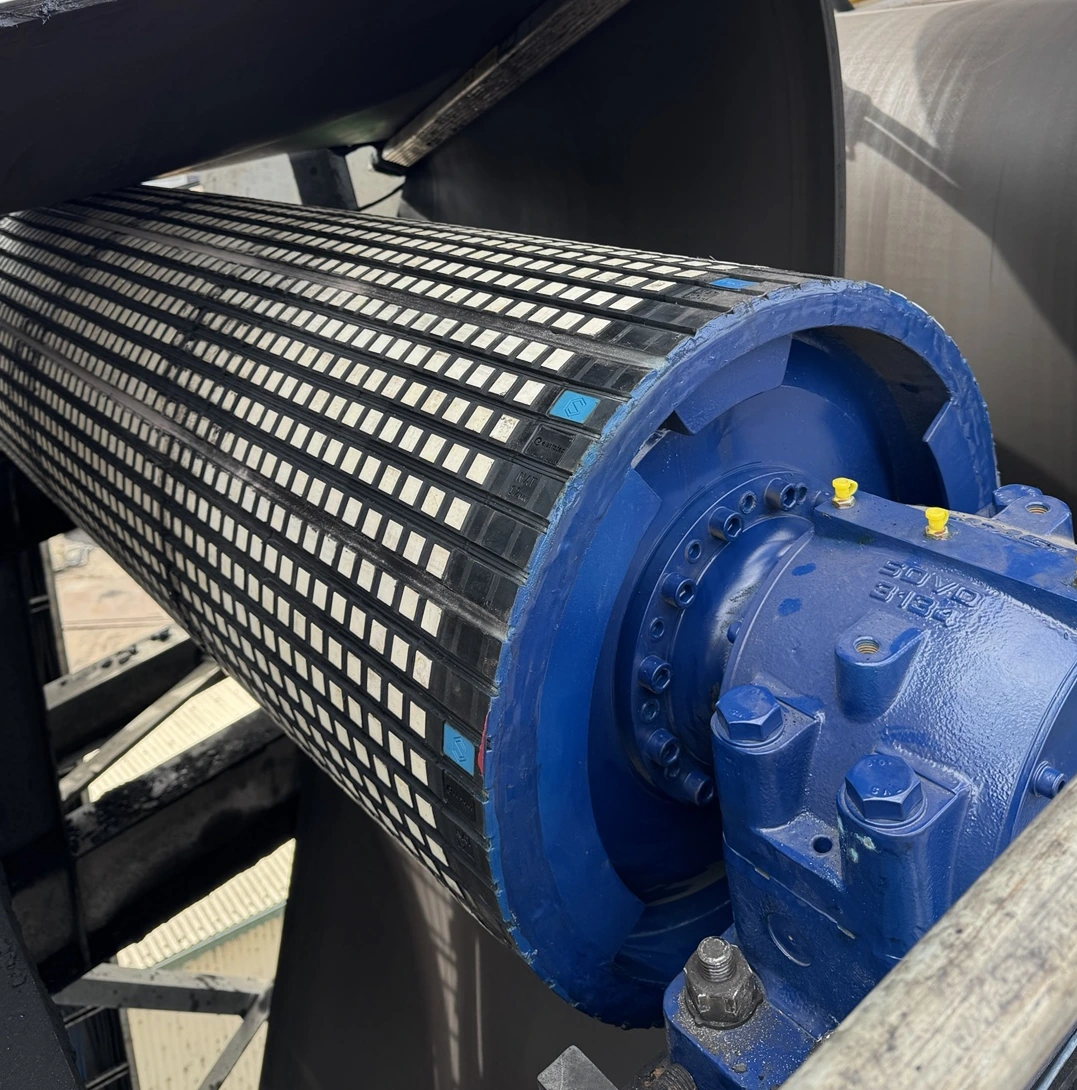
The blue lagging shown here is polyurethane. Colour is not a universal compound, hardness or FRAS identifier; use the actual material specification.
Enquire about polyurethane laggingCeramic tiles provide a wear-resistant contact surface. The tile shape, coverage and supporting construction determine how that surface interacts with the belt.
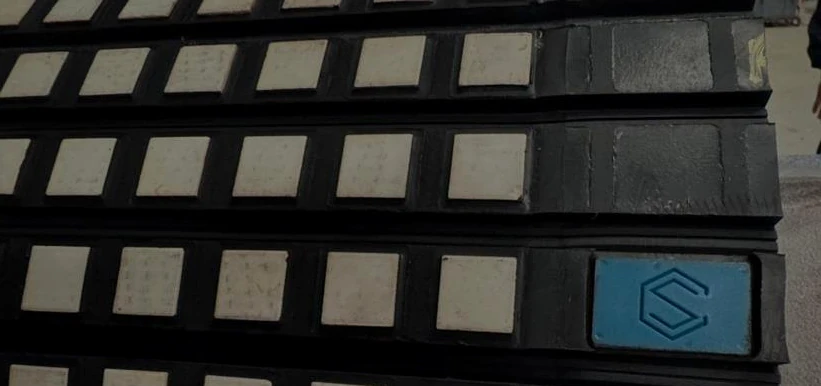
Raised ceramic profiles engage the belt cover to improve traction, particularly where water and fines make grip difficult. Assess belt tensions, wrap, contact pressure and cover condition. More grip is not permission to alter take-up tension without checking the conveyor.
Smooth tiles provide wear resistance without the same raised traction profile. They can suit non-drive pulleys exposed to abrasive residue, subject to belt-cover condition and contact-pressure review.
Tiles are embedded in a rubber matrix, combining a hard wearing surface with a resilient backing. Tile coverage, spacing, drainage channels and the bond to the shell are all part of the specification.
Tiles are bonded to the prepared shell without a rubber backing. This is a separate construction, not another name for ceramic-rubber. Joint filling, shell preparation, tile retention and the selected drive or non-drive surface need to be agreed.
Look for cracked, loose or missing tiles, open joints, trapped material and local belt-cover damage. A hard, wear-resistant surface is only useful when it remains secure and compatible with the belt.
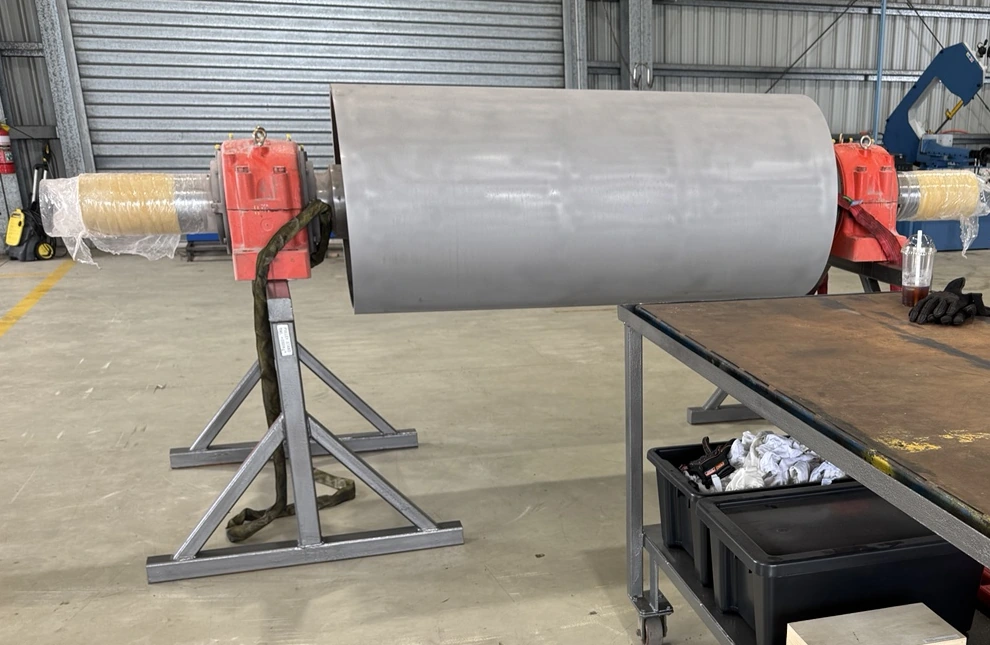
The photograph shows rubber-backed ceramic, not direct-bond ceramic. Confirm availability, installation scope and documentation for the selected construction.
Use the reported failure and measured operating conditions to narrow the options. These are selection considerations, not a load rating or a substitute for the pulley specification.
| Observed requirement | Options to assess | Information that matters |
|---|---|---|
| Rubber already gives satisfactory service | Retain a suitable rubber specification. | Installed cost, wear rate, groove condition and replacement interval. |
| Non-drive abrasion and sticky build-up | Polyurethane; compare with smooth ceramic where appropriate. | Clean-side or carry-side contact, residue, slip marks, cover wear and temperature. |
| Wet drive slip | Suitable grooved rubber or dimpled ceramic. | T1/T2, wrap, starting/braking loads, drainage, take-up operation and belt-cover condition. |
| Recurring severe lagging wear | Polyurethane or ceramic, according to the pulley role. | Wear mechanism, tile/compound suitability, belt damage and change-out cost. |
| Lagging separates from the shell | Review the existing material and application process first. | Surface preparation, contamination, cure conditions, bond failure and shell condition. |
Cold-bonded sheets, hot-vulcanised backing systems, hot-cast polyurethane and direct-bond tiles are different processes. A method suitable for one product may not suit another. Confirm whether the pulley can be removed, the workshop or site facilities required, the cure period and the inspection plan before committing the shutdown.
Identify the pulley and belt face in contact. Record the existing material, finished diameter, thickness, pattern, service life and failure. Include belt speed, running and peak tensions, wrap, reversals, water, fines and operating temperature. Agree the replacement profile, clearances and method before application.
Confirm the selected product, application method and inspection plan with the order.
INSPECTION & HANDOVER
The agreed dossier records what was inspected, assembled and checked. The level of reporting is established with the scope.
The examples shown are taken from Superior’s workshop records. They retain the recorded lagging specification, preparation conditions and adhesion result. Some source sections are omitted from this public copy.
Open the QA examplesThese are selected original excerpts, not a complete signed dossier. The recorded values and acceptance requirement apply to the example job only.
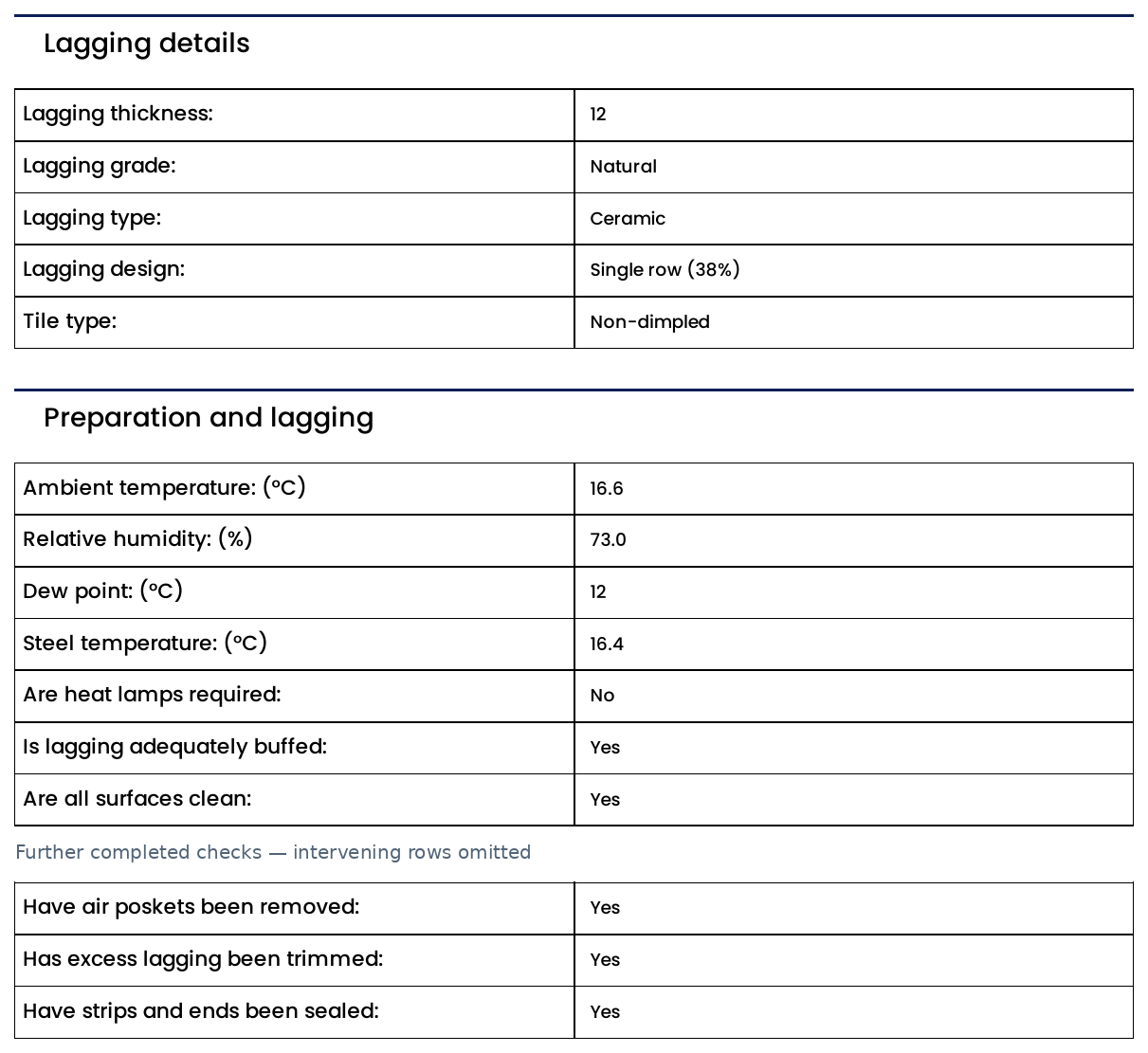 Lagging specification and preparation checks ↗
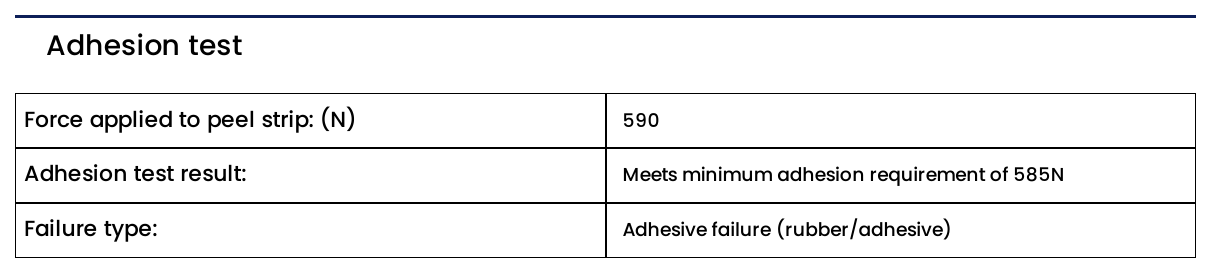 Adhesion test record ↗
The excerpt does not state strip width or test method. Do not use these figures as an acceptance criterion for another job.
The displayed examples relate to ceramic-rubber lagging. Polyurethane work needs its own material and process records; the ceramic example is not a polyurethane test. Agree grade, hardness scale, finished dimensions, profile, preparation and cure records, and any applicable bond tests before starting.
COMMON ENQUIRIES
Yes. Include the drawing number and revision, quantity, required date, component preferences and any specified inspection records. Highlight changes from the installed assembly.
Send the reported problem, photographs and available drawing. Inspection is needed to establish what can be reused, the extent of repairs and whether refurbishment is economical.
No. Include face width, bearing centres, shaft and drive-end dimensions, bearing/housing details and finished diameter over lagging. Unknown measurements can remain blank.
Include the full specification and supporting documentation. The proposed components and inspection scope are confirmed before supply or workshop work begins.
PRODUCT DOCUMENTS
Supply, specification, refurbishment, lagging and QA examples using Superior workshop and site photographs.
Open PDF ↗The retained supplier-range tables and original lettered drawing. Reference information, not a stock list or manufacturing approval.
Open PDF ↗Selected original lagging and adhesion records. Chemical and supplier sections are omitted from this public copy.
Open PDF ↗
PAGET, MACKAY
Send the pulley drawing, photographs or asset details with your enquiry. We can review new supply, refurbishment, rubber, polyurethane or ceramic lagging and the inspection records required for handover.
Send a pulley enquiryLET’S GET THE DETAILS RIGHT
Send one specification per enquiry, with a quantity for identical assemblies. Use another enquiry or attach a clearly itemised schedule for different pulleys.

Conveyor maintenance, belt repairs, workshop refurbishment and component supply.
Based in Paget, Mackay. Site support across the Bowen Basin and surrounding regions.
45–47 Centurion Drive
Paget QLD 4740